Showing posts with label review. Show all posts

Monday, June 17, 2024

Two Enduring Movies

 MY LIFE AS A DOG


“My Life as a Dog” just became one of my favorite movies. Since Doug hadn’t seen it, I couldn’t wait to watch it a second time with him for a double-dose of enjoyment. It is currently streaming on Prime. 


My Life as a Dog is in the Criterion Collection

Doug was restless and could hardly make it to the concluding credits. What is to me a realistic movie that captures the strength and creativity of a youth in calamitous circumstances was to Doug a melancholy movie about a boy with no home. It made him sad.


“My Life as a Dog” inspired me and reminded me that genius filmmakers exist (or have existed), though you might not think so, given the usual pablum showing at Columbiana. This is a Swedish movie released in 1987. Some things never grow old.


Another movie about a boy that makes no notice of the passing of time is “Empire of the Sun,” as meaningful today as when it was made in 1984. It also has sadness, but this underscores a boy’s courage and endurance in the face of everyday disasters.


The spirit of these two protagonists is meaningful today. Rather than become victims of harrowing circumstances beyond their control, Ingemar (in My Life as a Dog) and Jamie (in Empire of the Sun) tackle the circumstances of their life as best they can and never lose hope.


Sunday, November 13, 2022

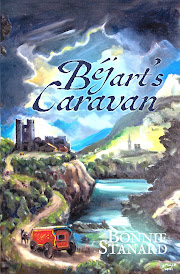
Review of Béjart's Caravan


The Historical Novel Society’s review of my novel Béjart’s Caravan says that the “ribald adventures never fail to entertain.” Set in 17th Century France, the man named Béjart holds together a troupe of troublemakers and actors.  


Here’s an excerpt of the HNS review.

…Character-focused, the tale follows the troupe through their adventures with peasants, nobles, religious fanatics, and the dreaded plague, always in the shadow of the great French writer, actor, and poet Molière…Indeed, the Augusto Troupe displays “few virtues and many vices.”


Stanard wields the deft pen of an experienced novelist as she relays this earthy, delightfully period-appropriate tale. It’s filled with vivid detail that makes France and its people come to life, and readers can rest assured that their money is well-spent on this rousing tale of ambition, art, and the foibles of human beings.


The complete review can be found at:


 https://historicalnovelsociety.org/reviews/bejarts-caravan/


Monday, April 30, 2018

art in Lake City


ArtFields


You never know who you'll meet at an art show.
Last week my sister Nila and I were dashing around shops and restaurants in Lake City, South Carolina looking at paintings and other art. It’s misleading to say ArtFields is just an art show. It’s an adventure. Downtown Main Street becomes a vibrant showplace for a week. You’ll find paintings hanging above racks of blouses or tee shirts or baby clothes. Mixed media in a mattress showroom. Installation art at the barber shop.
 
Nila with dress made of nitrile gloves, by artist Rebecca Whitson.
It rained for a couple of days, but that didn’t dampen the enthusiasm of the townspeople and shopkeepers. Their spirit was infectious and we hardly felt our feet get wet.

A number of the buildings recall the town’s rural past and have been restored, such as the Bean Market, the Jones-CarterGallery (which used to be a feed-and-seed store), and the McClam Livery Stables. About 400 works of art were professionally displayed at over 40 different locations. It took us more than a morning to see the art at the ROB (Ragsdale Old Building). This building was erected in the 1920s and was used as a charcoal briquette warehouse.
I gave this sculpture by Bryan Rapp of Myrtle Beach a score of 10.
Nila also liked Rapp's sculpture.
You can vote for your favorites, so Nila and I gave each work a score from 1-10 (10 the best). A comparison of our scores proved the adage that “beauty is in the eye of the beholder.” According to the program, winning artists will take home $12,500. 

As a general rule I give low scores to politically explicit art, in part because a judgment on the merit of the art apart from the politics isn't easy to make. However, I was stopped by this text from a mixed media piece: "there are as many kindergartners as there are prisoners in the United States" and "1 in 3 white males in America has a college degree. 1 in 3 black males expected to experience incarceration in their lifetime."

Saturday concluded ArtFields for 2018. The event is a winner, and I look forward to returning next year.
A teapot sculpture by Logan Woodle of Conway. I love the whimsical steam.
Nila at the orange sign that marked the location of art exhibits.

Sunday, August 27, 2017

The Other Einstein


WAS EINSTEIN A JERK?

I’m surprised at the positive reception the novel The Other Einstein has received from reviewers. A number of them on Amazon have responded as if author Marie Benedict has discovered and revealed an historical truth. The novel purports that Einstein's wife Mileva was largely responsible for the theory that made Einstein famous. There is no evidence to support this. Benedict’s imagination soared on rumor and supposition. Yet, some readers have taken it for fact. This is one reason why many writers debate the issue of ethics in historical fiction.

POLITICAL PANDERING
Another troubling aspect of this novel is the political pandering to feminists in a most unpleasant way. Yes, women have been suppressed for ages, but our heroes are not those who wallow in being victims. What is there to admire in that? Where is the creative woman? The fighter? The strong character? The intellectual? Benedict attempts to make Mileva a genius equal to Albert, mostly with coffee shop conversations, but the tone of the life as it’s presented is not that of a person inspired by intellectual pursuits.

NOT SO SMART
Given Benedict’s assumption that Mileva had strong family ties and a father who made sacrifices to see that she was given a superior education, it’s not admirable that she essentially dumped on him to have a fling with Albert. Being four years older than Albert, Mileva must have realized the possible consequences of an illicit love affair.

THE GRUDGE FACTOR
This book is an appeal to our baser emotions. The outcome is not that we like and admire Mileva as a strong woman. Instead, it arouses our anger and spite against Albert. Benedict manipulates the reader into wanting to take revenge on him. Strip him of his good reputation. Throw the bum out of the hall of fame.

Unfortunately, this book gives feminists nothing to cheer about. Instead of celebrating a woman of genius and vision, it turns into a whiny treatise on how badly Albert Einstein treated his first wife. 


Saturday, April 1, 2017

Open Book


Colm Tóibín  
The author Colm Tóibín appeared at the University of South Carolina Thursday night as part of the OpenBook series.

He reminisced about being nominated for a Booker Prize and not getting it, all with deprecating humor—how he attended the awards ceremony convinced he’d take the prize, only to hear another name announced as the winner.

He discussed writing his book, The Master, a creative nonfiction account of the life of Henry James. To get beyond “James was born, he wrote, he died,” Tóibín brought his own reality to the carefully researched details of James’ life. Tóibín’s lecture ranged over literature with the assurance of a college professor, from Shakespeare to Robert Louis Stevenson to James Joyce. 

Irish author Colm Tóibín
 
It was exciting to see Tóibín, who wrote one of my favorite novels, Brooklyn. The book was made into a movie which is the antithesis of Hollywood’s ubiquitous hysterical adventure movies. Brooklyn has no car chases, no explosions, no gratuitous sex, no guns or murders, no gays, transsexuals or deprived blacks. You might call it a miracle.

Tuesday, December 13, 2016

Time travel


PLOT DISTORTED BY TIME 

Amy Adams plays Louise in “Arrival,” the movie I saw tonight. Alien airships appear at 12 locations on earth causing chaos the world over. The movie veers further into scientific fantasy with a plot in which Time deviates from a linear progression. If we’re given a story in which Time is not linear, the question becomes, “then what is it?” Is it swerving? Intermittent? In this movie, there’s no telling what progression Time takes.

If, according to “Arrival,” Time is not linear, the concept of yesterday, today, and tomorrow changes, though Louise is transported to scenes in her life that can be identified as taking place in the “past” (with respect to what is presented as “present”). This rattling around in time has no rhyme or reason, except as it satisfies the needs of the movie’s plot.
 
This Seth Thomas clock is on my mantel.
There are calculated revelations which save Louise’s life and the world from war. These revelations are timed at moments that are strategic to the plot but are obscure with respect to their origin in Time. Louise discovers a universal language at a critical moment, but why at that particular time? In like manner, she is acquainted with a Chinese diplomat, a relationship she uses to save the world from war. This information is interjected at a timely moment in the movie, but where in the sequence of Time did this become a fact? More fundamentally, if Time is not linear in “Arrival,” what does Louise know at any given moment in the movie?

If Time deviates from linear, what will happen to plot elements such as cause and effect? How will we develop motivation? The spaceship in “Arrival” isn’t as hard to believe as the movie’s portrayal of Time.


Wednesday, August 24, 2016

James River Writers


BEST SELF-PUBLISHED NOVEL CONTEST

It was an ordinary morning today until I opened an email with this note from Annette Marquis of the James River Writers in Virginia.
Thank you so much for your entry in the Best Self-Published Novel contest. Our contest committee has finished the first rounds of judging and passed their top six choices along to our final judge, Christopher Rhodes. We are pleased to inform you that your book, Dust on the Bible, was selected to move on to the second round. Congratulations!
The James River Writers is an established, reputable organization with a history of supporting writers. I'd love to go to their conference in October, but a family reunion in Illinois takes precedence.

A plethora of contests has sprung up online purporting to recognize excellence in self-published books. A quick look at some of them suggests that awarding medals is an up and coming business. 

Entry fees may range from $75-$95. And the number of categories in some of these contests is mind-boggling— "70 categories to choose from" (Next Generation Indie Book Awards).  Reader Views Reviews awards from two to eight awards in 29 categories biannually. The Ben Franklin Awards names three winners in 54 categories. The National Indie Excellence Award has about 160 categories; Independent Publisher's Ippy Awards gives gold, silver, and bronze medals in 83 categories. I have to wonder how many quality judges they find to decide excellence in 83 categories.

The Book Designer website has a list of contests, but after looking at it, I question whether my money would be well spent entering them. Last year, I went for the WritersDigest contest for self-published novels. Wasted my money.


Friday, July 15, 2016

Book Club


NOVELIST CARLA DAMRON

Last night I attended for the first time a meeting of the local book club. Author Carla Damron visited and talked about her novel, The Stone Necklace. Her presentation was enthusiastic and covered background about how she came to write the story. Her audience of about 15-20 persons was delighted and engaged in a lively discussion about the characters.

The fulcrum of book’s plot rests on the death of Mitchel Hastings, who has a heart attack followed by an auto accident in the first chapter. From there, Damron intertwines the stories of those characters impacted by the death. It touches on numerous contemporary themes, such as eating disorder, cancer recovery, homelessness, and families in decline. No surprises but well written.

I have to admit to some envy of the marketing that has supported The Stone Necklace. I know—books produced by traditional publishers (this book, by Univ. of South Carolina Press) fare much better than self-published books in this regard, but I don’t have to like it.

Sunday, October 4, 2015

Marx Book Review


ELEANOR MARX

I stayed up until after 2:00 AM this morning finishing Rachel Holmes' well-documented biography of Eleanor Marx, daughter of Karl Marx. I couldn't go to sleep once I got into the dirty dealings of the nefarious Edward Aveling. The last two chapters lay the groundwork for another book that addresses the dichotomy of Eleanor's way of life versus her way of death.

Here's my take on the book:

It provides a sweeping picture of socialist movements of latter 19th Century England, touching on France and Germany. This is a character study of Eleanor Marx only in so much as it relates to her career. She was an indefatigable person of enviable intellect in promoting her father's principles. Her life was given to travel, organizing labor, writing and promoting the rights of workers.

In advocating an eight-hour day, age limits for employing children, and more humane treatment of women, she met a swell of opposition and wasn't one to falter. With youthful boldness she faced ridicule and rejection from colleagues and powerful businessmen.

For many years she lived hand to mouth, moved from one shabby place to another, and persisted with enthusiasm to promote a socialist agenda. This won her many friends and admirers, especially among people working in sweat shops.

Holmes has given Eleanor the character of a person who faced obstacles with determination, energy, and sagacity. That she was the unlikeliest of persons to commit suicide is not the focus of this book. Eleanor's devotion was first and foremost to her father's social philosophy. That she gave up this cause and took her life when faced with her lover's betrayal is covered in one short chapter at the end of the book. Worse yet, the lover-cum-conman who betrayed her inherited her estate.

The book's concluding scenario is reason enough for another biography. This is not meant as a criticism of Holmes' book, which is a fine introduction to the socialist scene at the time Eleanor Marx lived. 

Friday, July 17, 2015

BlueInk Review Best Books of 2015

MASTER of Westfall Plantation makes BlueInk's Best Books list

My historical fiction novel, MASTER of Westfall Plantation, has made BlueInk Review's Best Books of 2015 list on Goodreads. BlueInk writes, "Our list is composed of our favorite titles—books that we hope will find an enthusiastic audience."

The competition is underway and I hope you'll vote for MASTER. Goodreads ranks books based on votes. Every vote is important to increase my book's ranking on the site. I hope you'll go to their web page here and cast your vote. MASTER of Westfall Plantation is number 29 on the list.

Update: As of July 18, MASTER has moved to number ONE! Many thanks to you voters!

Thursday, June 18, 2015

Commercial Reviews


REVIEWERS FOR SELF-PUBLISHED BOOKS

One of the perpetual problems with the self-publishing segment of the publishing industry is the quality our novels. In traditional publishing houses, agents and editors review and select only the most marketable manuscripts to pursue, polish, and publish. By the time these books appear at Barnes and Noble, they have been professionally rendered, whether or not they’re to our taste.

ABSENCE OF OVERSIGHT
As a class, self published novels aren't in the same league. That is to say they don't measure up to a professional standard. Many self published writers, for reasons of ego and/or expense, too often don’t hire copywriters and/or editors to polish their text or designers for the lay-out and cover, which creates a disadvantage for the pool of writers. Oscar Wilde said “All bad poetry springs from genuine feeling.” You can apply that to many self-published books. They arise out of genuine feeling, but that doesn’t make them books that anybody wants to read.

ONLINE REVIEWS
Amazon and Barnes & Noble provide us writers a service by allowing readers to review our books online. Ratings of from one to five stars go a long way in helping readers sift through the deluge of choices. Whether or not these reviews are complimentary to our novels, they offer readers guidance. Even bad ones may not be a negative. For instance, if a reviewer complains of too much historical background, I would find that as a positive.

Companies are coming into the marketplace to provide professional critiques of self-published books. Given that nobody is going to read books at no cost for a career, these companies charge writers for the reviews. Of the few that I’m familiar with, charges range from $59 (Readers Favorite Book Reviews) to $424 (Kirkus Reviews). A couple of other companies specializing in book reviews are Chanticleer and BlueInk Reviews. Kirkus has been around long enough to have earned our trust, but others I mention here are relatively new, and for that reason, I remind you to "let the buyer beware." 

The Historical Novel Society reviews books free of charge, but your book has to be submitted to them and accepted before they proceed. 

BUYING BOOKS
One way I keep in touch with my grandkids is to periodically send them books. I spent this morning looking for children’s books to buy. I avoid online descriptions and reviews in magazines. According to them, every book is a good one. I prefer Kirkus Reviews' website, which has a section of children’s books. It is one of the few commercial sites where you’ll find negative as well a positive comments. 

Friday, March 27, 2015

PubSense


PubSense SUMMIT IN CHARLESTON, SC

Last weekend I attended the PubSense Summit in Charleston, South Carolina which was pitched for “emerging authors, emerging avenues.” It was held in the lovely Francis Marion Hotel where the accommodations were ideal for a group of this size. I’m not good at estimates, but I’d guess about 300 people. 
I'm in line at registration

I had high expectations for this three-day conference, with session titles such as “Tools for Heightened Visibility;” “Yep, There’s an App for That;” and “Book Distribution Chain Fact Versus Fiction.” I anticipated inside information for indie publishers and self publishers. Perhaps my expectations were too high. If I were an “emerging,” and I’m defining this as a writer beginning to research self publishing, the conference was a good resource. For those of us who have already published books and are looking for tools to promote and market them, it provided little new information.

Though I didn’t learn much new about publishing, I did learn that I have a hearing deficiency, to the point that I missed comments made in the panel discussions. Take whatever I write with that caveat.

CREATEsPACE AND INGRAM SPARK
Representatives of createSpace and Ingram Spark were prominent in the panels and gave us background information about the services they offer. Also indie presses such as SourceBook and Promontory. We were encouraged to get to know our local library, indie bookstore, and Barnes and Noble in order to get our books placed in their inventory. It’s been my experience that once you identify yourself as self-published, only the indie bookstore will give you the time of day.

  
PASSED-OVER SUBJECTS
I’d like to have heard more on how to get my books reviewed by professional reviewers; a comparison of returns from various social media platforms; specifics about how to upgrade my SEO; how to contact and make use of book clubs; how Amazon, iBooks, Ingram Flash and other POD publishers compare in terms of promoting their authors (for example Apple iBooks spotlights a “Book of the Week”).


ELEPHANT IN THE ROOM
An important subject that wasn’t addressed at PubSense is the subscription service book distributors. To omit a discussion of the pros and cons of going with Oyster or Scribd is an oversight for a conference aimed at writers. It’s a complicated issue even for seasoned professionals, not to mention us POD authors.

Saturday, July 5, 2014

Review, A Nervous Splendor


BOOK REVIEW
A NERVOUS SPLENDOR, Vienna 1888/1889

I just finished reading this nonfiction book by Frederic Morton. An aptly titled book, it cuts a wide swath, following the lives of four or five famous characters living in Vienna in 1888, including Freud, Strauss, Klimt, and Mahler. Overshadowing their stories is Crown Prince Rudolf, heir to the Austrian throne, who is denied a voice in governing the country by his austere father Emperor Franz Joseph. 

An apathetic grandeur affects Vienna's self-indulgent and lavish nobility. Profligate affairs abound, and marriages are merely financial arrangements. The author suggests something is wrong with this scene…perhaps Vienna is too fond of its past…but nobody seems to care about fixing it, with the possible exception of Rudolf. 

Rudolf convinces a 17 year-old of an aristocratic family to commit suicide with him in January 1889. The author describes the year with historic detail but doesn’t provide possible emotional grounding, especially in the case of Rudolf who remains as enigmatic at the end as at the beginning. The book doesn’t get you immediately hooked, and it requires some time to get invested in the story, perhaps because it is wide ranging rather than focused.

The photos and sketches draw you into the story. In particular, the photos of Rudolf are emotionally moving. He has the eyes of a man about to lose everything. 

Sunday, February 23, 2014

Bob Mayer


Book ‘Em North Carolina Writers Conference and Book Fair

A day in Lumberton attending the Book ‘Em Conference was a day well spent. Bob Mayer, the keynote speaker, gave one of the best presentations I’ve seen in quite a while. Authors and panels discussed genres such as historical fiction, romantic suspense, mystery, and fantasy as well as craft such as characterization and plotting. Of the numerous sessions (about three per hour from 10:00 AM until 4:30 PM), I attended the ones given in the auditorium.

KIOSK PUBLISHING
The future of publishing, said Bob Mayer, will be kiosk printing, i.e. you will stop at a computerized kiosk, enter the name of the book you want (or scan the selection), push a button, and the book will be produced in a matter of minutes. He didn’t clarify whether the end product will be a hard copy or a computer file, but my guess is that either will be available. This is no science fiction fantasy. It's on the horizon. Already Columbia has lost its most strategically located Barnes and Noble, which was preceded by Books A-Million pulling out on the other side of busy Harbison Boulevard.

If we’re going to have book kiosks, I hope we’ll also have DVD kiosks for movies. Some of us still prefer to have a home library of favorites in spite of the choices on Netflix and other providers … What! you may say, but there are hundreds if not thousands of choices. Yes, but how many are independent and foreign movies? 

MUSE OR NO MUSE
Back to Bob. His comments about writing can be taken as hints for successful living. For instance, he encouraged us to: have a goal; conquer fear; and persevere. When he said there is no muse, just hard work, I’m not sure I agree. Not about hard work but about the muse. I don’t doubt that hard work produces the books we read, but the ones that strike at our hearts are written by inspired writers.

Although he provided other good information, I’ll only mention that he confirmed what others have said: you need at least three published books before you can get a toe-hold for marketing success.

BOOK TRAILER
Adam Cushman of Red 14 Films talked about book trailers and provided examples. I can only say that if an author can afford $10,000 to buy a trailer, he probably doesn’t need the promotion. Adam is an appealing young man, but the trailer for his book was disturbingly violent.

WRITER'S VOICE
Author Haywood Smith gave a charming and humorous talk about writing, her divorce, quirky relatives, and publishers (who can “squeeze the voice out” of writers).

LOCAL MEDIA
Every state should have a television show like The Tarheel Traveler. Scott Mason, who puts it together, entertained us with excerpts that highlighted people and places in the state. There is so much media focus on national personalities and places that a void is growing on the local scene. It’s refreshing to know we still have reporters stalking the local backwoods for stories. 

Thursday, February 20, 2014

Trip to Cincinnati


Things I learned on my trip to Cincinnati

—Tractor trailers take up as much road space as cars on interstate highways around Atlanta.

—A four-wheel drive is a necessity on highways north of the Mason Dixon line.

—The Magic Tree House audio book is more annoying than a noisy kid in the back seat.

—I need to subscribe to The New York Review of Books.

Just back from a driving a thousand miles in bad weather. We had icy roads from South Carolina to Rome, Georgia. On the way from Rome to Cincinnati, we encountered a snow storm. However, the interstate highways were reasonably safe. The problem was Cincinnati’s residential streets, some of which were so icy the hills shifted us into wheel-spinning backward mobility.

TRACTOR TRAILERS If you haven’t driven I-75 north of Atlanta’s ring road (I-285) lately, you’ll be surprised at the number of tractor trailers. In fact, they bloat the two right lanes. I get claustrophobic when my car is caught between two towering trailers, often piggy-back trailers. They’re such an obstruction, it’s a challenge to see the road signs and exit markers. The experience is a sober reminder of how dependent we are on goods and materials produced in distant places.

THE MAGIC TREE HOUSE Accompanying us on the trip was our five year-old grandson. Even he became bored with the later episodes of The Magic Tree House, which was enthusiastically recommended by our local library. I’m tempted to say anybody can write a popular children’s book, but I’m not that naïve. It’s not a stretch to think a computer app could produce these adventures, the formula is so obvious.

NEW YORK REVIEW OF BOOKS Every time I visit my son Matt, I read whatever copies of The New York Review of Books he has lying around his place. I’m always impressed with the quality of writing and the range of subjects you’ll find in any one issue. I read an interesting political article -- questions about why nobody’s been held responsible for the fraud and mismanagement that led to our financial crisis. And there are articles treating international news. Of course there are book reviews. I was impressed to see Francine Prose take on a book that’s being hailed as literary—The Goldfinch by Donna Tartt. The review compared Tartt’s writing to that of Charles Dickens, which put Tartt’s style to considerable disadvantage.

Back in Columbia, SC. Sore throat. Kids are little cauldrons of bacteria. 


Saturday, November 9, 2013

Beware the Movie Of Pity


HATE AND PITY IN 12 YEARS


I watched the movie “12 Years a Slave” with my friend Ginny this afternoon. It was brutal, not a moment of relief from the misery. I’m still trying to overcome the feelings of hate and pity that came from the movie.

I wonder if it will polarize the races, for there was a glaring absence of any decent white Southerners. The white traders and owners were portrayed as men stupid enough to destroy valuable "property" that had cost them hundreds of dollars ($800 to $1200 in 1850s dollars). And the white women were no less vicious.

Worst of all, the slaves were presented as powerless victims, as if they had no influence over their fate. They became pitiful pawns. This approach by director Steve McQueen took away the little integrity slaves were able to create for themselves. They had their ways of resisting their owners—subtle and nonconfrontational. They “accidentally” broke tools; claimed to be too sick to work; “misunderstood” directions; pretended to be stupid; delayed obeying orders. This would have been a better movie if we could have seen some of the clever ways in which they asserted their will. And we could have something to admire. As it is, there’s nothing to admire about either white Southerners or slaves.

To put the book 12 Years a Slave in perspective, the former slave who wrote it did so with the purpose of arousing antislavery sentiment and gaining the support of abolitionists. It is entirely possible he exaggerated his misfortunes. To take it for the literal truth without questioning the writer's motives leads to misguided ideas about our history. Unfortunately, this movie comes across as abolitionist propaganda. This is not to say I excuse any of our slave-owning predecessors, but the “truth” of 12 Years a Slave ignores the shades of gray.


Saturday, October 19, 2013

Review, Jonathan Franzen Book


Bewitched by Jonathan Franzen

I’ve repeated at our writers’ workshop what I was once told by a literary agent:
Just because something is true to life doesn’t make it interesting.
Agents and editors advise us fiction writers that successful plots require tension with a capital T. Secondly, a sympathetic, or at least exciting, protagonist is essential. As we writers discover, rules are made to prove the exceptions.

First encounter
Last December I visited son Jason and Ellen (dtr.-in-law), and while in their home I picked up a copy of Freedom by Jonathan Franzen. Before I could get to the middle of the story (it’s 600 pages), it was time for me to leave. The initial pages not only describe a typical American wife but provide pithy insights into personality and society. It’s a story with more insights than action. However, by the time I left Jason and Ellen’s place, the author’s descriptive analyses had overwhelmed me, and I stopped reading the book with little if any curiosity about what happened to Patty, the female character.

Return to the scene of the crime
In September I returned to my son’s home for a visit and picked up Freedom again. Without knowing where I’d stopped before, I opened to a random page and started reading. Though the events of the plot were hazy in my memory, I recognized the main characters, Patty and Walter. The plot continued to be mundane, but I read until it was time to leave again, and I still hadn’t finished the book. I put it down without a thought of picking it up again.
However, now I may buy the book to read the end. I ask myself, Why? In Freedom’s characters, I found out more than I ever wanted to know about people’s motives, insecurities, and longings. Even at that, the characters are none too appealing. In particular, Patty is wimpy, dependent, and ordinary. Even her neuroses are typically American. The plot trudges along in everyday life and has no more tension than waiting in line at the supermarket. I can see truth in what Franzen is saying, but nothing very exciting takes place. I don’t even care what happens to the characters. What is it about this novel that keeps tugging at me?

Hooked on the writer
I’ve decided that I haven’t fallen for Franzen’s story, I’ve been taken in by the writer himself. His love of studying people and what makes them tick permeates his writing and imposes a barely perceptible but certain urgency. Even commonplace people and events fascinate him, and he conveys this passion to the reader. If the narrative is long-winded, Franzen pulls it off in a tone that quietly insists he’s telling us something we need to know. He’s like a salesman who can convince you to buy cat food when you don’t own a cat.

Wednesday, September 4, 2013

Review, Heyday


A REASON TO NOT READ

I’ve just decided to quit reading Heday, a novel by Kurt Andersen, after 483 pages of the 620 pages.

The problem is not so much with Heyday (though it has some problems) as with me. I’ve become a mean-spirited reader. I’m picking apart the book. In spite of my first-hand knowledge of the time and effort that goes into writing a novel, and this is an ambitious historical fiction, my approach has sunk to a sort of scavenger hunt. 

How did this happen?

Anderson set forth to create an ambitious narrative about five people who journey across North America in 1848 and, according to the book’s 26 quoted reviewers, succeeded beautifully—a “tour de force” according to the Baltimore Sun. More glowing tributes: “riveting historical detail” (Entertainment Weekly); “command of the period” (The New Yorker). You get the idea. This book has more compliments than most writers get in a lifetime.

My problem began as early as page 24 when Andersen speaks of “India rubber overshoes.” A flag goes up. The rubber of 1848 melted or turned brittle in the weather, but maybe there were shoes. I gave him the benefit of the doubt. When steel first showed up in spectacles, I hesitated. That was followed by a steel blade on a pistol, followed by a steel plow. Steel was so difficult to produce and so expensive at the time it’s incredible there would be a plow.

A WEDGE IN CREDIBILITY

Anderson had flipped my switch. From that time on, I looked for failures in accuracy, most often anachronisms. When he mentioned celebrating Thanksgiving Day, the plot and characters became less interesting than looking for the author’s next mistake. In any given night, I wrote question marks by items referenced in the text, things such as a urinal, tube of paint, cigarette, pink daffodil. Did they exist in America in 1848? Historical fiction is a genre that lends itself to vicious games of this sort.

To continue reading would be a little like living with a faithless lover not because you love him, but just for the satisfaction of catching him in another deception.


Monday, May 20, 2013

Frederick Law Olmstead


THE ANTEBELLUM SOUTH

I’m reading The Cotton Kingdom by Frederick Law Olmstead, a journalist who traveled about the South in the 1850s and recorded experiences which were published in the New York Times and NY Tribune. First-hand accounts, whether or not they are biased, give insight into the physical world of our past.
The first collection of Olmstead’s articles was published in 1857 as From the Journal of a Northern Traveler on Horse back. Eventually his works were consolidated into this 600 page book. This is social history with limited academic overtones. What makes it so interesting is the immediacy of Olmstead’s journey. We travel with him and sweat in the heat, slosh through muddy roads, worry about the horse, and get fleas from dirty beds. We’re bit by mosquitoes. Get caught at night in the rain.
Because of the detail he gives us—he recounts conversations—Olmstead must have taken copious notes. I can see him pulling his horse to the side of a wagon track road to sit on a stump and write down the events and people he’s just experienced. Given the length of his work, you’d think he’d need a cart to carry his many notes, obviously written long hand. I can only wonder what he did with them as he went from farm house to farm. 
If you think the wild west was wild, read Olmstead. There were white people in the Nineteenth Century South less civilized than the Indians they disparaged. Many were illiterate and more unwilling than unable to take care of basic needs such as shelter and food. According to Olmstead:
...for every rich man’s house, I am sure that I passed a dozen shabby and half-furnished cottages, and at least a hundred cabins—mere hovels, such as none but a poor farmer would house his cattle in at the North.
I came to realize how little prepared the antebellum South was for travelers. And I’m not just talking about the absence of trains, stagecoaches, and passable roads. Maps were inadequate, roads unmarked, and when Olmstead got lost, he found that the local population couldn’t give directions to landmarks that turned out to be nearby.
As a matter of course, he overnighted in the homes of people. Their hospitality wasn’t necessarily free, but he was always able to find a place to stay, even in the backwoods of Mississippi and Louisiana. To find accommodations, he stopped at one farm and then another as night approached until somebody took him in. Though he found “white houses with groves of evergreen trees about them,” more often than not, he encountered “a hilly wilderness, with a few dreary villages, and many isolated cotton farms, with comfortless habitations for black and white upon them.”
His observations on the Southern attitude toward slavery breaks no new ground, but the examples he provides will make us squirm. Southern abolitionists weren’t uncommon, but they usually wanted slaves freed and sent back to Africa. At the other end of the spectrum were the whites who took it as their God-given right to own slaves. Many of them took better care of their dogs and horses. Olmstead:
I do not think that I have ever seen the sudden death of a negro noticed in a Southern newspaper, or heard it referred to in conversation, that the loss of property, rather than the extinction of life, was not the evident occasion of interest.
Olmstead quotes a conversation he overheard on a steamboat. A passenger describes a runaway slave who was caught by a river captain, put in irons, and left exposed to weather. The man died as a result and the owner said that “[an attorney] offered to take the case and prosecute the captain; and he says if he don’t recover every red cent the man was worth he won’t ask me for a fee. It comes kinder hard on me. I bought the nigger up, counting I should make a speculation on him…I expect ‘twas a dead loss of eight hundred dollars, right out of pocket.”
Many religious slave owners, including preachers, tried to give slavery a good name by claiming it Christianized heathens. Olmstead, who had given this credence, revised his view after visiting the South.
Whatever of civilization, and…of Christianity, they [the slaves] were acquiring…but poorly compensate the effect of the systematic withdrawal from them of all the usual influences which tend to nourish the moral nature and develop the intellectual faculties…
In the latter chapters of the book, Olmstead makes the argument that slavery created a privileged class which used its resources to buy more slaves rather than establish cultural amenities, such as schools and libraries, which might have developed a community spirit. His sentences become long winded and the story tone didactic.
When we read of the conditions in the South less than two centuries ago, our faults fly into our face. It’s easy to fall victim to wholesale condemnation. But there were Southerners like this Mississippian, who said, “it [slavery] is unfortunately fixed upon us; we could not do away with it if we wished; our duty is only to make the best of a bad thing; to lessen its evils as much as we can, so far as we have to do with it individually.”
Olmstead’s account reminds us of how much progress we’ve made, but there are writers today giving us good reasons to keep up the effort, to continue to improve.