Showing posts with label Beaufort. Show all posts

Monday, July 11, 2022

Books at Beaufort Bookstore


Beaufort Bookstore owner Bruce and I sat for a chat

BEAUFORT BOOKSTORE


Beaufort is a coastal SC town that attracts vacationers who can do without a beach, e.g., history buffs and artists. Doug and I drove there and met with Bruce Pope, owner of the Beaufort Bookstore, located in Jean Ribaut Square (2127 Boundary Street). It's one of those independent bookstores that support us writers by featuring local authors. They have copies of my books on their shelves.


With competition like Amazon, bookstores depend on local support. If you're in the area, I hope you'll check it out.


Beaufort Bookstore Phone - (843) 525-1066


Sunday, March 6, 2016

Pat Conroy


I am sorry to hear about author Pat Conroy’s passing this week. He contributed much to the literary scene in South Carolina. He was as much a showman as writer. He’ll be missed. 

Every life is a factor of time.

Tuesday, October 27, 2015

Yemassee Festival Wrap-up


Lowcountry Arts & Literary Festival

Frampton Plantation's live oaks, Spanish moss, grassy lawn, and historic white plantation house provided an ideal setting last weekend. It was made even better by sunshine and warm breezes. I met interesting writers, ate gumbo, watched reenactors fire muskets, and listened to John T. Wayne (grandson of John Wayne) explain how the word “cowboy” came into our language (orphans who went west after the Civil War became cowboys). 

 Director Jack Gannon and John T. Wayne

According to festival directors Jack Gannon and Cyndi Williams-Barnier, about 450 visitors attended, less than last year. With respect to the traffic, it was a slow day. It seems numerous other Lowcountry events occurred on Saturday, which heightened competition and possibly drew away visitors.

Directors Cyndi Williams-Barnier and Jack Gannon visited.

I arrived early Saturday to put up my tent and arrange my display. Though I would have preferred a location near the porch where a program of speakers and musicians continued throughout the day, my tent was easily visible on entering the plantation. On either side of me were experienced writers—A.J. Brown, author of short stories, and romance writer Stella Price. 

My sister Nila helped me get ready.

Occasional volleys from muskets could be heard during the day. Reenactors kept a camp fire going (they cooked bacon) and wore homespun clothes in spite of the sunny, warm day. The rest of us were spraying insect repellent.  


Artists and writers, as well as caterers, put up tents on the plantation's spacious grounds.  

Jack and Cindi deserve a big "thank you" for providing encouragement for the arts, which have seen support dwindle in the last year with the closing of two major annual events—the SC Book Festival and the SC Writers Workshop Conference. I'm happy to see that plans are already underway for the 2016 Lowcountry Arts & Literary Festival, which will return to Frampton Plantation.

On Sunday, I took the Historic Beaufort Fall Festival of Houses & Gardens Tour. The houses were at some distance from one other (from Pigeon Point to Coosaw Island) and we spent more time than we expected driving. The food samples at each home were top notch. Kudos to the Beaufort restaurants preparing them (Saltus River Grill; Vegetable Kingdom; Plums; The Kitchen; and Breakwater Restaurant). 
Nila helped me enjoy Beaufort's house tour. 

Thursday, October 22, 2015

Yemassee Festival


SATURDAY ARTS & LITERARY FESTIVAL

Festival co-founder Jack Gannon sent this notice today with more info about the festival and its history:
Our Jasper County premiere newspaper, the Jasper County Sun Times, featured an article about us in yesterday’s edition! Here’s the link to that article: http://www.jaspersuntimes.com/news/2015-10-21/lowcountry-arts-and-literary-festival-set-saturday-new-venue.
A banner does wonders at events such as this to attract visitors to your display and to identify your genre. Too bad I didn't think about that before yesterday. I went by Office Depot to order one only to discover the turnaround is over a week. I'll have to rely on my posters, such as the one to the right.


MOVING MORE THAN BOOKS
My office is a mess. I've been organizing my stuff in preparation to pack the car. Already have two fold-up tables and five folding chairs in the back of my Nissan Rogue. By the time I get my books, displays, scrapbooks, vase with flowers, etc. loaded, I hope I'll have room for my luggage.

The word is that Interstate 26 is undergoing construction and causing miles of back-ups. I'll Google an alternative route. Tomorrow I'm off to Yemassee for a day at Frampton Plantation on Saturday. Come by and see me if you're there.

Sunday, October 18, 2015

Yemassee Festival


LOWCOUNTRY ARTS & LITERARY FESTIVAL

Hope you can be at the festival this Saturday (Oct. 24). Take a look at the trailer on YouTube. My photo appears at about the 2 min 52 second spot. At 10:00 Saturday morning, I'll be there with other authors as well as artists, and musicians. You'll find us under the grand old oak trees on the grounds of the historic Frampton Plantation in Yemassee, South Carolina. 

It's the perfect location to talk about antebellum history as it's portrayed in my four novels. Today I've formatted and printed a promotional hand-out with a photo of the covers of my books.


My assistants, Richard Harley and Nila Rawls, will help me hoist a tent, unload my table and chairs, and haul in the books. I hope the tent will only be needed to shade me from the bright sunshine. 

After the festival is over, Richard, Nila, and I are driving to Beaufort (about 20 miles away) on Sunday for the "Kitchens & Cuisine" tour of the Fall Festival of Houses & Gardens. My experience has been that Beaufort homes are more interesting than those in Charleston, at least the ones I've seen on tour.

Wednesday, September 23, 2015

Lowcountry Festival


OCTOBER LITERARY FESTIVAL

I've recently updated my website with news of the upcoming Lowcountry Arts and Literary Festival on Saturday, October 24. I'll be there with my antebellum books, which are tailor-made for the Festival's location on Frampton Plantation at Yemassee, SC. The current big house, which dates back to 1868, replaces the one General Sherman's troops burned.

Frampton Plantation, Yemassee, SC

The Festival takes place on the plantation grounds under grand old oaks. In the back yard, you can see Civil War earthworks that General Lee's Army erected to defend the Confederate RR supply line between Savannah and Charleston. 

The building has been renovated to add electricity and plumbing and now houses the Lowcountry Visitor's Center as well as the local tourism commission. 

It promises to be a day of immersion in our history. Because many of us have mixed feelings about our Confederate past, we don't celebrate it. However, as a way of recognizing the courage of slaves and the inhumane system of law our state once upheld, we preserve the memory of that time. Beautiful old Lowcountry houses, such as the one at Frampton Plantation, are testaments to the skillful handiwork of slaves and freed blacks.

You can bookend the Lowcountry Arts & Literary Festival with the Beaufort Fall Festival of Houses and Gardens, which takes place the same weekend. It's a three-day event beginning on Friday evening and ending Sunday midday. I'm planning to wrap up the weekend at the Sunday Kitchens & Cuisine tour (five chefs at five houses). Beaufort is a short drive from Yemassee, maybe 20 minutes.

Till Next Time
A copy of the literary journal Kestrel containing my short story "Till Next Time" came in the mail. I'm pleased to see my work included with the outstanding quality of stories and poems that appear in this issue (Number 34). A copy of Kestrel is $15 and available from the Department of Language & Literature, Fairmont State University, Fairmont, WV 26554.

Monday, August 10, 2015

Art Show

RED PIANO TOO ART SHOW

What a day of meeting visitors, artists, and other writers! I arrived early at 9:00 AM, before the door was unlocked. 


My table was installed by the entrance, and as the first to see visitors, I became the greeter with "Hello, welcome to Red Piano Too." As they trailed inside, most people were reluctant to stop the traffic at my display, but many wandered the rooms and returned to ask about my books.


 Featured artist Asher Robinson (below) sat on the side porch surrounded by paint and plywood (instead of canvas) and worked on paintings while chatting with visitors. As I watched, he finished a marlin and began another painting.


Artists James Denmark (below right) and Diane Britton Dunham (center) are well respected artists who have spent years refining their craft, working with oils and collages. Their focus, like most of the art at Red Piano Too, celebrates African American life and history.


Gail Reed (below left) has published a children's book, "I Can't Find My Manners," which is illustrated by Leonard Jones. She is chatting with David Bruce Grim, whose novel "Swift Currents" depicts the challenges slaves faced following emancipation.

Alfeda Robinson (below) makes sweetgrass baskets, one of our oldest art forms dating back to slaves from West Africa. She demonstrated the making of a basket by working throughout the show. 
 Mary Mack (below left) has been a longstanding promoter of African American art and artists. The reputation of her shop has drawn art patrons from north and south of St. Helena Island along the East Coast.

Mary Mack appreciates art in many forms, as evidenced by the inventory of Red Piano Too, things such as quilts, wood carvings, tin figures, unique dolls, furniture, greeting cards, glass, and jewelry.  

I'm happy to have had the opportunity to be a part of the show and to get to know talented artists as well as interesting art patrons. 


Wednesday, August 5, 2015

Prep for Red Piano Too


TOOLS TO TAKE US BACK IN TIME

Yesterday at the Old Mill Antique Mall is West Columbia (SC), I looked for relics of bygone times, especially those of rural America. At Red Piano Too's Art Show Saturday (August 8), I'll have a table to display my four antebellum novels. Mementos add interest, and that was what I was after. Found this miniature wagon (below), actually labeled a railroad car.

I filled the wagon with copies of my novel MASTER of Westfall Plantation, which is on the list of Best Books of 2015 by goodreads/BlueInk. I plan to have this as part of my display.

I also bought a singletree, which is part of a harness used with draft horses (horses used to plow or pull loads). It equalizes the load for the horse so that one side doesn't produce more drag than the other. Though you can't see it well in the photo, there are two hooks on each end of the singletree where lines are attached to each side of a horse's collar. The hook in the center connects lines from the singletree to the plow (or other load). 

  singletree
Maybe I'll have room on my table for the maul and butter mold I bought, examples of early tools made of wood. 
maul on left, butter mold on right
Or a hand scythe, an example of an implement forged in iron by blacksmiths and used to cut grain or grass. 
hand scythe
I'm looking forward to being on St. Helena Island with Mary Mack and Red Piano Too's artists.  If you're interested in the Gullah culture, it'll be in full array. Hope to see you there!


Monday, August 3, 2015

Update


REVISING AGAIN, WILL IT EVER END?
 
I'm slugging through another revision of my sequel to "Dust on the Bible." I thought it was polished and ready for my Editor (Steven Bauer), but after a week at the beach and away from the manuscript, I returned only to realize it's still wordy. I'm at the point of wondering if it will ever be finished (same point I've reached with every book). I'm trying not get totally sick of working on it. There will be more editing after Steven finishes with it. What I hope he doesn't suggest is something like a concept change.

You may have received one of my emails thanking those who voted and reminding others to vote for MASTER of Westfall, on the Goodreads/BlueInk list of Best Books of 2015. It's moved up the list from near the bottom to Number 3 (yeah!).
 

I'm thinking ahead to Saturday when I'll be at Red Piano Too's Art Show at St. Helena Island. Until my printer ran out of ink (new printer and have to order ink online, which I didn't realize), I was printing antebellum photos to display with my plantation novels Saturday. I hope to have a notebook of photos such as the ones below from the Library of Congress.

Tonight I'm going to Columbia II Writers Workshop. It meets the first and third Mondays of the month. It's a group of serious writers, many of them with published books.


Friday, May 1, 2015

LOVE OF PLACE

Today is the last day of my sojourn at Beaufort where I've been working on a World War II era novel. I’m already sad about leaving. The first thing I see when I awake in the morning are oak trees in the sunshine with Spanish moss swiping the breezes. It looks as if the roots of the oaks have sucked up sand and dirt and turned them into stringy clouds that cling to the limbs. I don’t even have to move from my bed. The oaks are right outside a wide window.

When I go to the kitchen, I pass my desk and throw open the curtains that screen a three-wide window. Outside beyond the deck is the marsh. This morning the tide is in and there’s something of a lake out there with marsh grass growing in thick islands about the water. By noon it will be all marsh grass with a muddy trail snaking through the roots.
This is my window view at flood tide.
PLACE vs PEOPLE
Love of place is a counterpart to love of people, the inorganic counterpart, if you will. Obviously my attachment to this place has little to do with people, though I enjoy interaction with strangers. There are perhaps two local residents who would recognize me if I stopped them on a Beaufort street.

I have the same “love” for Brussels, Belgium where I lived for four years. The old quarter, or Grand Place, is ancient with cobble streets, stone alleys, open-air restaurants displaying fishes from the North Sea, and a square of castle-like guild houses. It’s physical beauty is entwined with my memories of being there. But to visit is sweet sorrow. Brussels for all its beauty, is filled with strangers and thoughts of days gone by.

Many writers are inspired by their love of place. For example, Aida Rogers has published a collection of “love letters” to South Carolina by local writers titled State of the Heart.*  

THE WORD LOVE
I wonder why there’s not a word other than love to describe attachment to a place (maybe there is and I don’t know it…). Love suggests to me emotion with reciprocity, one that is only genuine if it is mutual. You may argue that you love somebody who doesn’t love you, but that’s belittling to oneself, if not self-destructive. Not my idea of love.

Tomorrow night I’ll be back in Columbia where the scenery is rather boring. There’s no window by my bed. My desk overlooks the driveway. And the wind rarely blows. At least that’s my impression but I look outside so seldom that may be a misconception. But I’ll be with my friends again. There’s Ginny and Carole and Miriam and Laura and many more people of fond acquaintance I look forward to seeing. I’m confident when I say I love them. But do I love this apartment at Shell Point?

*http://www.sc.edu/uscpress/books/2013/7251.html

Monday, April 6, 2015

Beaufort

AWAY FROM HOME WRITING
      
 I’m packing for Beaufort where I’ll spend several weeks working on my Lily manuscript. It's about a two-hour drive from my home in Columbia, SC. I’ve been busy with other matters and so far away from Lily that I will open the files with some trepidation. There’s always a chance you’ll lose your enthusiasm for a story which, more than anything else, turns writing into drudgery. It’s like being dead in the water. You can often tell when a writer has no ardor or passion for his work. Even when the words work hard to tell of intrigues, heartache, or sex, there arises between the lines a spiritual absence.

Friday, September 26, 2014

Photos of the Lowcountry


A couple of reasons why I like Beaufort, SC.

Marshes as seen from Coosaw Island. 
In the distance is the Coosaw River. 


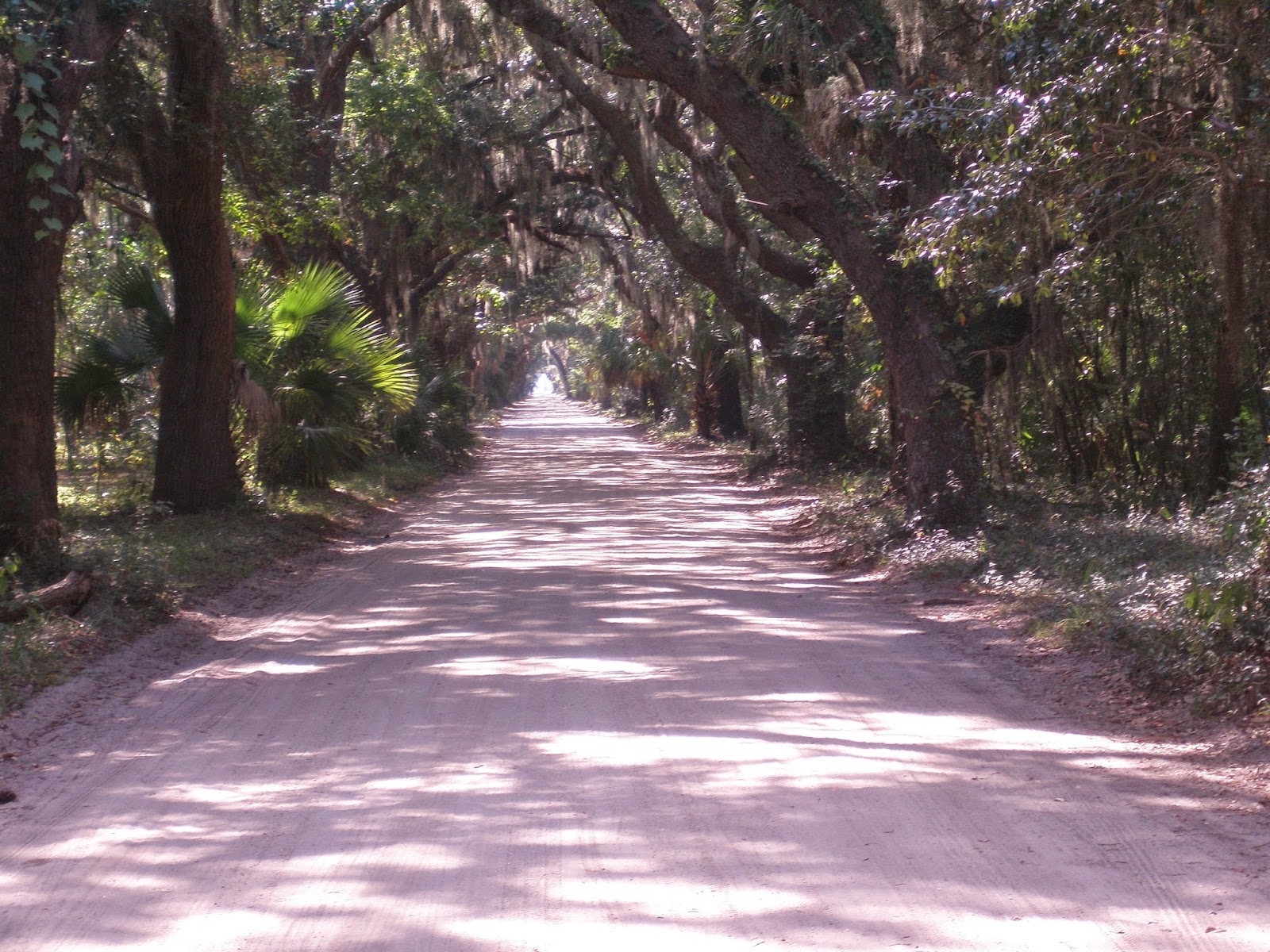
Avenue of oaks, on St. Helena Island


I’ve been in Beaufort working on a coming-of-age manuscript. It’s a young adult crossover novel which may have more crossover appeal than YA. I say that because it’s historical fiction (takes place on a farm in 1945), and I’m not sure how many teenagers are interested in farms or 1945.  


The POD question


To POD or not to POD

Last night I attended the Beaufort writers’ workshop and met several interesting writers. Because of another local author event, the group was small, but the dedication to writing was there.

The question of whether to pursue an agent or self publish came up, confirming that it’s a common issue for writers everywhere. We don’t want to give up hope of securing an agent. On the other hand, when we spend more time trying to get one than on writing, the merits of self publishing become more interesting.

Self publishing isn’t an option on par with traditional NYC publishers yet mainly because there’s a lack of quality management regarding the manuscripts that are published. If POD publishers could fix that, it would challenge the establishment in a major way.

In fact, I hope the day comes when POD publishers realize a benefit from specializing, such that they become high-end and low-end. If a POD publisher sets quality standards for what it accepts, i.e., refuses inferior manuscripts, why couldn’t it build a reputation with clout comparable to Random House or HarperCollins?

In workshop we critiqued a couple of autobiographies in progress. I’m not accustomed to critiquing work presented orally without a hard copy and had to pay close attention. Anyway, one excerpt was by a writer who traveled in a yacht with her husband for eight years. Another was by a writer who has experienced miraculous healing with meditation.

Before I sign off, I was impressed with the hospitality of St. John’s Lutheran Church on Lady’s Island. Parishioners who were there for reasons other than writing ushered me past the locked and coded door and into the conference room, which I couldn’t have found by myself.


Wednesday, January 22, 2014

Shell Point


WHAT'S IN VIEW 

I’m sitting at a table I use as a desk, looking out three adjoining windows. Foremost in view is the handrail of the patio, made of treated wood lumber. (When are we going to get transparent plastic balusters?) Past the wood railing is a big tree, a water oak, I believe. The leaves are small and green, even in January. I’m on the second floor of a garage apartment, so I’m looking into the upper part of the tree. Its roots grow into the banks of the marsh.

Beyond the tree is what looks like a field of ripe grain, except there’s a stream of mud running through it. A couple of hours ago, water enough to make a river coursed in a trail through what is not grain but spartina grass.

A pine thicket grows on a distant shore. There’s a short dock into the marsh, though I can’t imagine what you’d do on the dock. Boats never come through here though a shallow bottom one could maneuver at flood tide.
If I walk to the bedroom and look out that window, I’ll see the sun going down. Every day it glows like a fiery ember as it sinks into the horizon beyond the Broad River bridge. One evening the color was so pervasive it infused the atmosphere with a peach glow. When the sun’s last rays disappear, you can see the lights of the cars crossing the bridge.
There have been nights when I’ve opened the curtains to a moon so bright I could almost read without turning on a light. I’m always amazed at the full moon’s saintly glow, throwing ghastly shadows. There’s something other-worldly about its light.
Why am I here? I’m NOT here to admire the view. I’m here to write, but there are times when I just can’t take Tilmon and Westfall Plantation any longer. My story seems to be out of my control. It’s falling apart. And I haven’t even finished a first draft of the manuscript. I thought I was approaching the finish line, but the line keeps moving … and at the moment, it’s stuck in mud no less thick than that in the marsh. I can only hope my editor will save me.

Wednesday, November 6, 2013

Trees at Beaufort


AFTER a MONTH In BEAUFORT

If you drive around the islands off the coast of Beaufort at low tide, you’ll see more mud in a day than most people see in a lifetime. At high tide, these muddy flats turn into shallow lakes. This constant movement of water into and out of these expanses —which defines many an island—gives the impression that the ocean itself breathes.

Sometimes spartina grass grows in such a consistent pattern you can look across a vista of marshes and swear you’re looking at a field of grain. In the state of South Carolina, only Charleston County, which is a larger county, has more marshes than Beaufort.

I spent October watching tides and working on a manuscript. It’s become obvious to me that I can make the most sustainable progress in writing by secluding myself. And I’ve just about completed a first draft of the sequel to my three previous antebellum novels.

On the day before I returned to Columbia and my real life, I drove around and took photos.


Trees, especially live oaks with streams of gray moss whiffling in the breeze, are known to live 500-600 years, which means some of the old ones were around for the Revolutionary War, antebellum cotton plantations, and the Civil war. If only they could tell us what they’ve lived through.


I can’t believe how many photos I took of roads. Not highways. Dirt-track roads with grass growing in the alley. 


Obviously you can only go about 30 miles per hour without rattling your teeth, but these roads are one reason I love this area.


And then there are the marshes.


Some time ago when I was driving to Tombee Plantation, I discovered a small family graveyard overgrown by trees and shrubs. Since I was last there, the shrubs have been cut away, and you can see the headstones.


Without a sandy beach, the town has been saved from the frenzy of wholesale tourists. There are so many things to like about Beaufort. More than Bay Street with its restaurants and art galleries. Between the commercial street and the river is a landscaped park with swings, picnic tables, and paths. I like to sit in one of the swings and watch the sea traffic on the river. Smell the water. Feel the breeze.


Tuesday, April 30, 2013

Red Piano Too


HOME from BEAUFORT

My week at Beaufort was productive and something of a relief. The Tilmon/Rio story’s conclusion has been stuck at the bottom of my files for a long time. I was afraid I had lost interest. After a couple of days of reading and sorting notes, the story came alive. Beaufort is about the only place where I can work at my desk for ten straight hours without going crazy. I think it’s because I set my desk where I can look out the window to the marsh and the incoming and outgoing tide.
Here’s the view from the window.

                                                      Flood Tide

I took off an afternoon to drive to St. Helena Island. There are maps showing the antebellum village of St. Hellenaville located in the area of Pine Island. Today St. Helenville Road is the main road that departs Sea Island Parkway for that area. If you drive there today, you’ll find the Dulamo development, but no signs of a village or a past.

I stopped by Red Piano Too, one of my favorite shops, to say hello to Mary Mack, who is knowledgeable about Gullah art. I should have known better. It’s an accomplishment for me to get out of the shop without buying something. This time, I didn’t have my guard up. I came away with a wonderful painting by Allen Fireall. It’s hanging on the wall of my office. She’s “Vegetable Woman” and she keeps me company.

                                       Vegetable Woman by Allen Fireall

If I keep my nose to the grindstone, I should have this fourth novel finished by the end of the year. That’s what I’m working toward.

Wednesday, April 10, 2013

Retreat to Shell Point


SOLITUDE OF THE MARSHES

Some writers can put together sentences with kids playing in the next room. Or when a hungry spouse is waiting to have supper. Or when the laundry piles up. I’m not that kind of writer. In fact, I am gratified to hear of other writers, like myself, who have trouble working at home.

At the end of the day, when I’ve accomplished many household tasks, revived friendships, kept in touch with the family, I realize I haven’t worked on my writing. It’s not that I don’t value my writing, but there are so many intrusions, even if they are pleasant. The obligations of my home, family, and friends are ones I cherish and joyfully fulfill.

But at the end of the day, I’m disappointed that I haven’t made time to write. That’s why I’m getting out of town. Saturday I’ll leave for a week in Beaufort, SC, an area that’s the background and setting for my antebellum novels. If I could have another home, it would be in Beaufort, not only because of its involvement in the controversial history of slavery, but because it has deep spiritual roots.

The apartment where I’ll stay overlooks a tidal marsh. The coming and going of the tides settles me into a comfort I don’t find anywhere else. Often there’s a breeze in the dried marsh grass and a smell of the mud flats. I can almost feel the subtle, quiet movement of the tide as a physical sensation. It’s a kindly reminder that time has existed before me and will continue when I’m gone.

While I’m at Beaufort, I’ll drive out to St. Helena Island and sneak a look at Tombee, the plantation house of Thomas Chaplin whose diary drew me into an enduring interest in my antebellum history. Since it’s privately owned, I can’t go inside, but just being near the place inspires me. I’ve been before. It’s like visiting an intimate friend but one who is enigmatic. It gives rise to reflection on the past, a place where I’d much rather visit than live.

I hope to make some progress on what should be my final antebellum novel. Last December I was excited with the story, ready to get back to Tilmon and Rio. I hope I can recapture some of that enthusiasm.