Showing posts with label Writing. Show all posts

Wednesday, November 4, 2026

Poem published in Calliope


FEAR OF SLEEP in CALLIOPE


Calliope published my poem in its Fall 2026 issue and is available to read online. The title of the poem is “Fear of Sleep.”


I have problems with sleeping, am reluctant to go to sleep to begin with. In fact, at night after I lie in bed, my bedside lamp stays on until it seems okay to turn out the light. Throughout the night, I sleep connected with earbuds to audio books and in wakeful moments listen to a voice reading a story.


I suspect sleep is a foretaste of nonexistence, giving us a sense of what death will be like. Unless we dream, sleep separates us from all that we know. There’s no sense of loss or gain, here or there, now or never, love or hate, no consciousness, no awareness, nothing. Then we wake up and we’re here, everything is as it was when we went to sleep.


But have you ever thought that you might wake and you’re not yourself? Or that you’re somewhere else? Surrounded by things you don’t recognize? Or have you thought that you might never wake up?


Calliope is a publication full of useful as well as entertaining reading. This issue has a couple of articles with practical suggestions helpful to writers on subjects such as reviving neglected manuscripts; how to land interviews; writing itself (like baking without a recipe). 


Sunday, September 20, 2026

Poetry at Fall Market


MEETING AT THE MARKET


Yesterday at the Fall Arts & Crafts Market while selling copies of my books I met Jacob, a senior at Irmo High School, who took an interest in my poetry chapbook Time Carries All Things Away. Jacob is a senior, taking a class with poetry and doing his own research. He plans to go into performing arts, and his bright brain will get him there if he has any luck.


Poetry gets a bad rep because it’s either simplistic or inscrutable. If you have an advanced degree in poetry, you may be able to decipher Milton, Yeates, or even Langston Hughes. The ordinary person has to read a while to find meaningful poetry in what is published today. This isn’t meant as criticism, it’s an observation. Poetry, like any branch of knowledge, takes shape in a range of forms.


But coming back to my conversation with Jacob and what got me to thinking. I wrote Time Carries All Things Away because there are things and people I don’t want to give up, even though their time has passed. Moments, some of them long since gone, were life-confirming or life-challenging, and poetry is a way for me to remember them.


That is to say, Time Carries All Things Away is like an album of peak moments and the peak may be heaven ward or hell ward.


Friday, September 4, 2026

Midlands Arts & Crafts Market


 MARK THE DATE

It’s going to be a perfect day with perfect weather, presumably cooler than now, for an outdoor event—The Fall Arts & Crafts Market on September 19th & 20th.


This market attracts gardeners, cooks, woodworkers, artists, and of course WRITERS (that’s me). You deserve to meet me. Come by my tent and see my set-up on the grassy median.


Saturday, 9 am – 4  pm

Sunday 12 noon – 4 pm

Address - 3483 Charleston Highway, West Columbia, SC

Free admission and easy parking.


The Market has ramped up this year to over 150 vendors. Come see what you can see (including me) at our Midlands Fall Arts & Crafts Market.


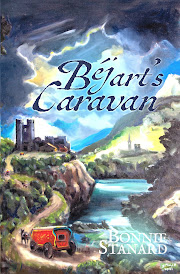
ON ANOTHER NOTE: My latest Novel, Béjart's Caravan is going to have a sequel. I've been working on it with the end pulling into sight, of course that's the end of the first draft. Gotta find an editor.


Friday, April 24, 2026

Too Long in the Company of Rain


Too Long in the Company of Rain appears in this issue
 

THERE HAVE ALWAYS BEEN LONERS

“Too Long in the Company of Rain” is a short story I wrote that Doubleback Review recently published.


I remember stories of my grandmother’s brother, Uncle Ben, who lived alone in a house in the woods and was something of an enigma even to his closest relatives. Never married, no children. If he ever had work of any sort, it wasn’t mentioned. He owned no farm equipment or animals. Didn’t have a car. But he had guns.


Though he was a loner, he wasn’t alone in his way of life. At that time, there were people in rural areas with little if any income who subsisted on backyard vegetables or game they trapped or hunted. They lived in timber houses worn to washboard by the weather, usually an inherited home.


When you live in a remote area such as this with little interaction with other people, your personality may be affected, and sometimes this is a negative. This gives you an idea about the protagonist of “Too Long in the Company of Rain”.


Doubleback Review publishes pieces that were previously published at journals that have become defunct. I've had a number of stories and poems published by journals that no longer exist, such as the North Atlantic Review, The Binnacle, RiverSedge, Crack the Spine, and The Copperhead Review. 


The link to the story is

https://doublebackreview.com/issue-8-1-april-2026/stanard-rain/


Thursday, March 19, 2026

Read Freely Fest at Richland Library


I hope to see you this weekend!

SC’S BIGGEST LOCAL AUTHOR EVENT

IT’S FREE


Read Freely Fest

Sat., March 28 (9am – 6pm) & Sun., March 29 (10am – 4pm)

Richland Main Library

1431 Assembly St, Columbia, SC


I'LL BE THERE

You’ll find me in “Indie Author Alley” with 30 other authors on the first level of the Library. Author presentations will continue seamlessly throughout the posted hours on both days. Numerous options each hour with shows on the Outdoor Main Stage, in the Auditorium, and in the Theater. This includes talks by writers of romantic reads, mysteries, graphic novels, and nonfiction. It’s a chance to meet and share ideas with other readers and writers. Check out the schedule.

https://www.readfreelyfest.com/schedule


BUY A BOOK

Also, check out the Library’s book sale with its selection of used books for readers of all ages, all priced at $1 each.


Don’t miss with this opportunity! Catch up on SC authors and genres, pick up a new signed book or buy a $1 used one, and most important, support your local talented writers.


I hope to see you there!


Friday, March 13, 2026

A.I. writing test


The hand of the future?


 AI vs Human Writing

In this article, you’re given five samples, each with two texts (one A.I and one human). The subjects are 1) Literary Fiction, 2) Fantasy, 3) Science Writing, 4) Historical Fiction, and 5) Poetry. The human samples are from well known writers, such as Carl Sagan and Cormac McCarthy. After you read two excerpts, you select the one you like best. In every case, I chose the A.I. excerpt.

In these particular examples, A.I. passages evoke more human experience with greater subtly than actual human writing. Being a cynic, I suspect the passages were carefully selected because of their explicit messages, but even at that, we writers need to forget about denial as a defense. We’re not going to out-write A.I. The solution is somewhere else.

If it’s any comfort, we can tell ourselves that A.I would be nowhere without us. We control the choices, so far.


NEW YORK TIMES link: https://www.nytimes.com/interactive/2026/03/09/business/ai-writing-quiz.html?ae=oa&campaign_id=9&emc=edit_nn_20260311&instance_id=172326&nl=the-morning&regi_id=227682554&resp=1&segment_id=216486&user_id=3e762e87559516d79141d72aacf418b9

A,I. is stealing our brain with our permission


Monday, January 5, 2026

Foggy Morning


My foggy backyard this morning

Weather as Inspiration

Remember some of the old novels (and movies) with foggy scenes. Sherlock Holmes comes to mind and Dr. Jekyll and Mr. Hyde. And Wuthering Heights. Fog comes across as an obstruction to clarity, not just in the scenery but in the plot. The characters have trouble seeing the problem and so do we.

A most effective use of fog appeared in the closing scene of the movie Casablanca. Who can forget the sense of uncertainty it gave us?

According to AI, fog is loaded with symbolism, e.g. impending doom, isolation, moral ambiguity, hidden truth. With all that luggage, you’d think fog would appear in more general fiction than it does. If fact, fog seems to be fading into the genre of horror.

Of course there are the novels where the plot depends less on characters and more on circumstances brought about by the weather. Many of these stories fall into the genre of dystopian fiction, sometimes post-apocalyptic. If that’s your interest, “Weird Weather” may be a source of inspiration- https://tvtropes.org/pmwiki/pmwiki.php/Main/WeirdWeather.

Literary fiction, at least in what I’ve been reading lately, seems to ignore the weather. The characters living through an average plot don’t seem to sweat a lot, nor use umbrellas, or slip on sleet or brush off snow (unless the setting is the tundra).

I’ve finished writing a young adult novel about Calvin, who lives through a winter in 1942. He’s cold much of the time, the fireplace is the only warm spot in his house—a house, by the way, that groans and creaks with the wind.

I am gratified by the changing weather from hot to cold to in-between. And by the changing scenery winter and summer bring. Normal weather reassures us that all is well with the world. Catastrophic events come along to remind us of how much the weather means.


Saturday, December 27, 2025

Words vs Numbers

 A LOOK AT WORDS AND NUMBERS

I suppose most writers are fascinated by words, as I am. Recently in a poem I wrote, I take the position that everything that exists  (whether physical, mental, emotional) has a word. In essence, you can’t think of something (much less write about it) if there’s no word for it. My hope is that readers will realize this premise is questionable. And as an aside, is it possible that language limits our imagination?

IS THERE A DIFFERENCE?

We communicate not just with words, but with numbers. I’ve told my sons to think of numbers as a different language. Some people hold that we developed numbers just as we developed words in a language. There are other people who will argue that there’s a difference. Numbers are not invented, they’re discovered.

ALL THINGS ARE NUMBER

So said Pythagoras. That is to say, the physical world, everything you can see, smell, taste, feel, or think is quantifiable. And with the discovery, or maybe it’s the invention, of calculus, even relationships and movement can be communicated with numbers.

UNIVERSALITY OF NUMBERS

Now that I’m into numbers over my head, I’ll back out by saying that math was my worst subject in school. Nonetheless, our fascination with numbers and our dependence on them has never been greater. Seems we’re on our way to proving Pythagoras correct.

DATA ADDICTS

For the entertainment of mathematicaphiles, The Week magazine provides a column titled “The Bottom Line.” The shear amount of data collection and analysis is mind-boggling. Numbers relay meanings and can affect our opinions, maybe even change our mind. Several random samples from The Week:

25% of unemployed persons are age 25 and over

64% of Spotify’s most popular podcasts in 2024 were men

The average commuter spends a record 63 hours a year stuck in traffic

Consumers plan to spend an average of $890/person on holiday gifts, food, etc. 

 A book titled Book of Unusual Knowledge, a Christmas gift, states that it took about 30 million hours for Stone Age workers to build Stonehenge. Who figured that out and how?


SCIENTIFIC EVIDENCE?

Now I’m getting around to another point.  More and more research and/or scientific findings depend on data collection and not infrequently on polls taken of participants.

ARE THESE FACTS OR DATA DRIBBLE?

From The Times (UK) researchers analyzed data from 86,00 adults across 27 countries to find that learning a second language may help slow aging. (As if the only variable in 86,000 people is the number of languages they speak.)

Ultra-processed foods made up 55% of the food Americans ate from 2021 to 2023 according to the Centers for Disease Control. (What’s the definition of ultra-processed food?)

Researchers at the Univ. of British Columbia discovered that people are happier doing activities when sharing with others. Some 41,000 participants were quizzed on how happy they were doing three activities. (How happy? How reliable is a person’s opinion of their own happiness? And what if they’re asked on a bad day?)


Monday, August 11, 2025

The Right to Write

 SLAVERY in HISTORY 

Charleston, SC and slavery books 
 

Why am I not surprised to see the above headline? Maybe it’s because of my experience as the author of four historical fiction novels that tell the story of whites and slaves on a Southern plantation in 1857.


Before self-publishing, I queried a number of literary agents seeking a representative for my work. Two of them told me (a white woman) that they could not sell the manuscript in New York because there were slaves in the story. Maybe my books aren’t good books, but to have them rejected because of the subject matter doesn’t give me a chance, even if they’re excellent books. How has compassionate socialism turned into political correctness and worse, repression? 


Our media spurns Putin’s decision to rewrite Russian history, as if we aren’t doing the same thing. According to The Conversation, “New Russian high school textbooks … attempt to whitewash Stalinist crimes and rehabilitate the Soviet Union’s legacy.”


In particular, Russian history is being revised to “gloss over Stalin’s Terror and other truths.”

From the History News Network:
Now you see him, now you don’t. Stalin was a past master at the art of airbrushing. In one classic set of photographs, there Stalin is with his secret police chief, Nikolai Yezhov — and in the next photo, there Yezhov isn’t (he was executed in 1940, with his boss’s approval). And now, in Vladimir Putin’s Russia, the airbrushing of history seems to be all the rage again.

Are we Americans trying to airbrush our history of slavery? A fiction novel set in the antebellum South either conforms to certain social strictures or it doesn’t get published by legacy publishers, regardless of the merit of the writing. When our history is ugly, no good is served by suppressing it.


Wednesday, April 23, 2025

Why Am I Here?

A book of ideas on thinking 

Why Am I Here?

If you’ve asked yourself this question in a strange room after a night of heavy drinking, that’s not what I’m about. If you’ve asked it while wondering if you should try to develop a relationship with a church or synagogue, you’re the person I’m talking to.


If you’re like me, you have difficulty buying the Christianity message, and Judaism seems to be a religion with no benefits, except maybe cultural. You can’t escape having a belief whether or not you put any thought into it. I know some people who seem to believe that the meaning of life is a good hamburger.


NO ANSWERS


Some of us can’t accept the meaning of life even if we don’t know the meaning. Or perhaps, we can’t accept that we can’t discover a meaning. Not even hamburgers.


Of course, philosophers can explain it, but when’s the last time you tried reading a book by John Locke or Immanuel Kant? Even when written in English, their words are unrecognizable, like a foreign language. Or if Socrates, the writing is so dense your thoughts implode.


On the other hand are philosophers who advocate meditation by which you can explore the self and existence. Maybe something’s wrong with me, but the only thing I get out of meditation is frustration. Wondering how much longer I can try to get my brain into a meaningful clarity has only led to boredom. 


GIVING UP THE QUESTIONS


In the book At the Intersection of Existence, author Davis Stanard asks himself questions about existence. Why Am I Here? Davis suggests we get over that and build a belief system that allows us to live a meaningful life, whatever is out there beyond life. He doesn’t provide answers but he gives himself, and by implication the reader, permission to quit asking unanswerable questions.


At the Intersection of Existence Back Cover

Saturday, April 5, 2025

A gift like none other

 LITERARY AND VERY PERSONAL

My daughter-in-law Cindy gave her son (my grandson Frank) a unique gift for his 18th birthday. In fact, only a limited number of these gifts exist. She researched Frank's ancestors, recorded the data, formatted photos and text, and printed a 50-page book that provides the names and dates of Frank’s male relatives and ancestors, living and dead. The title is “the Book of boys,” and in the case of Cindy’s family, it traces Frank’s ancestors back six generations.

The title is behind a cut-out

It's remarkable that four Civil War veterans appear in the pages, my ancestor John Gantt who lost an arm in the battle of the crater at Petersburg, VA; Jake Shumpert who was wounded at Gettysburg; Austin Stanard who fought with the 75th Illinois Corps; and Lorenzo Myers who was Captain of the 64th Ohio Infantry. 

Sixth generation
The birth locations of Frank’s closest male relatives are Ohio and Illinois. But going back generations, they’ve come from South Carolina, Pennsylvania, Kentucky, Missouri, and New York. 

Frank's paternal great-great grandfathers

Cindy has inherited from her father a love of genealogy. It’s obvious from this book that she spent hours on family history research, not to mention formatting the book. She’s a graphic designer, so that explains a lot. However it takes a devoted mother to turn a hobby into something that will be a family keepsake.


Monday, March 24, 2025

Quartet Journal


CAR ACCIDENT AS INSPIRATION

The May edition of Quartet Journal will publish my poem “Failing To Yield,” which is about an auto accident that occurred at Fairview Crossroads some years ago. The Crossroads has been the scene of a number of accidents, in part because it is the intersection of four roads: Hwy. 178, Neely Wingard Rd., Calks Ferry Rd., and Wagener Hwy. 


I didn’t view the accident, but I was there when the EMS arrived. There were a number of us standing on the sidelines in silence. The hush was broken by the wailing prayer of the grandmother who had been uninjured in the accident.


A car accident has been used as a point of departure for a number of writers, I’m thinking of novels. Here are several examples of writers who took an auto accident and went into diverse plots:


* If I Stay by Gayle Forman – an accident leads to a common trope of memory loss which gives rise to mystery and discovery.

* Age of Vice by Deepti Kapoor – five people are killed in a car accident which develops into a story about organized crime.

* The Heart by Maylis de Kerangal – a car accident begins a story about a heart transplant.

* Home Stretch by Graham Norton – after a car accident involving a wedding party, the driver can’t face living among the mourning relatives and friends.


The publisher of my poem, Quartet Journal, is an online poetry magazine with three issues a year—Winter, Spring/Summer, and Fall. Linda Blaskey is the usual editor, but on the masthead for 2025 is guest editor Franetta McMillian.


One of the things I enjoy about this magazine is the authors' comments about how they write and what has meaning for them. In the most recent edition, poet Deidra G. Allan wrote that a theme she comes back to is “the great interplay of hope and despair, grief and joy.” Her poem speaks implicitly to this theme and ends with “like a child’s laughter through the open window of a house in mourning.”

More of Quartet Journal at - https://www.quartetjournal.com.


Sunday, March 2, 2025

Selling Books


FESTIVALS

Selling books is a challenge, in part because readers are hard to find. Even publishers have to work hard to market books, so for an individual writer it becomes near impossible, unless of course they are already well known, e.g., Tom Hanks, Britney Spears.


To market my books I’ve been going to festivals with some success, depending on the festival. Yesterday I went to Augusta to check out the Fat Tuesday Food & Music Festival as a possible venue.  


A description of the festival was tantalizing: it was to “bring a taste of New Orleans to Augusta.” My sister Nila and I waited 30 minutes to pay the $10 entry fee, we spent about 15 minutes checking it out.

My sidekick and sister Nila
 

I should have taken a hint about the “festival” when a person selling gutters approached me at the entry. On surveying the vendors, instead of jambalaya, beignets, or gumbo, we saw the usual tacos, lemonade, funnel cake, and kettle corn. There were few other vendors selling things such as soaps and jewelry. It didn’t have the sort of traffic to sell books, or much of anything else. 

I wasn't looking for lemonade...

In the past, book festivals in our area were more successful, at least in the sense that they were big events that pulled traffic from a large area. The three-day South Carolina Book Festival held in Columbia closed down in 2015 after 19 years. Book “Em NC, held at Robeson, and Lowcountry Arts & Literary Festival have closed. 


What we have now are smaller festivals that are hanging on despite low traffic. Several that have returned annually for several years are the Indie Author at Aiken, SC, Author Showcase at the Richland Library, and Authors for Literacy at the Lexington library. A more intimate gathering that features authors is Readers & Writers held at a local restaurant. 


At a time when selling books has become as productive as digging for gold, festivals in SC are multiplying like rabbits. Flower festivals (azalea, iris), food (crawfish, peach, pimento cheese, shrimp, BBQ, strawberry, rice festivals), cultural (Celtic, Cajun, Italian, Swamp, Greek, Irish, hippie festivals); music (jazz, bluegrass, boogie), which is but a sampling. A list can be found here:

https://festivalguidesandreviews.com/south-carolina-festivals/


Saturday, March 1, 2025

Belle Isle Books


My book Dust on the Bible has been published by Belle Isle Books with a few changes to the original, which I self published several years ago. When Belle Isle expressed an interest in publishing another edition, I jumped at the offer. 


Dust on the Bible has appeal for readers of Young Adult, Literary, Historical Fiction, and Religion readers. Lily’s spiritual journey is combined with a mystery. When she tries to find out why her father is not living with the family, she discovers that her family is not as easily understood as she thought. 


The novel has received good reviews and I hope this edition will attract more traffic than the original. Chanticleer Reviews gave it five stars and a positive review with comments such as this:


"A poignant tale from start to finish, Dust on the Bible by Bonnie Stanard is a vivid and emotionally captivating story about the strife of a family living in rural South Carolina in 1944.

"Stanard creates a family with a non-nonsense way of life, but the family also carries a deep abiding love for each other; no matter what." 


Take a look, buy a book, and leave a comment!

THINKING QUOTE - "If you only read the books everyone else is reading, you can only think what everyone else is thinking." —Haruki Murakami

Dust on the Bible is available at Belle Isle Books:

https://www.belleislebooks.com/store/p258/Dust_on_the_Bible.html

amazon:

https://www.amazon.com/Dust-Bible-Bonnie-Stanard/dp/1962416739/ref=monarch_sidesheet_title

Barnes & Noble:

https://www.barnesandnoble.com/w/dust-on-the-bible-bonnie-stanard/1123171377?ean=9781962416733


Tuesday, February 4, 2025

London Tour


SHAKESPEARE LOST


Last week, while in London I went on a Shakespeare & Charles Dickens guided tour. Our guide was an actor who was knowledgeable about these literary giants. She referenced numerous characters from plays and novels. At stops along the way she recited passages from the works of Shakespeare and Dickens (dramatically, more Shakespeare than Dickens)— I felt stupid...I couldn’t identify the plays or novels being quoted. Do you know which Shakespeare plays list twins in the cast of characters?

As the tour progressed I noticed that the glass and steel buildings where we strolled had little to do with either Shakespeare or Dickens. At those places where we stopped for commentary (with dramatic quotes), we saw nary a building or garden or otherwise that related to the two writers.

Correction: there was a plaque on a wall at one stop with the notice that Shakespeare had lived in a house that no longer existed at a location somewhere nearby. The tour guide said that even the street no longer existed.

I gathered from this tour that no actual artifacts, such as rented rooms, homes, or pubs from the time of Shakespeare and Dickens, are left in London City.

That’s not to say the writers aren’t honored, well, at least Shakespeare. You can take in one of his plays at the Globe Theater, a copy of which has been built on the south bank of the River Thames.

Too bad, but London isn’t the place to find memories of Shakespeare or Dickens.