Showing posts with label publishing. Show all posts

Friday, April 24, 2026

Too Long in the Company of Rain


Too Long in the Company of Rain appears in this issue
 

THERE HAVE ALWAYS BEEN LONERS

“Too Long in the Company of Rain” is a short story I wrote that Doubleback Review recently published.


I remember stories of my grandmother’s brother, Uncle Ben, who lived alone in a house in the woods and was something of an enigma even to his closest relatives. Never married, no children. If he ever had work of any sort, it wasn’t mentioned. He owned no farm equipment or animals. Didn’t have a car. But he had guns.


Though he was a loner, he wasn’t alone in his way of life. At that time, there were people in rural areas with little if any income who subsisted on backyard vegetables or game they trapped or hunted. They lived in timber houses worn to washboard by the weather, usually an inherited home.


When you live in a remote area such as this with little interaction with other people, your personality may be affected, and sometimes this is a negative. This gives you an idea about the protagonist of “Too Long in the Company of Rain”.


Doubleback Review publishes pieces that were previously published at journals that have become defunct. I've had a number of stories and poems published by journals that no longer exist, such as the North Atlantic Review, The Binnacle, RiverSedge, Crack the Spine, and The Copperhead Review. 


The link to the story is

https://doublebackreview.com/issue-8-1-april-2026/stanard-rain/


Friday, March 13, 2026

A.I. writing test


The hand of the future?


 AI vs Human Writing

In this article, you’re given five samples, each with two texts (one A.I and one human). The subjects are 1) Literary Fiction, 2) Fantasy, 3) Science Writing, 4) Historical Fiction, and 5) Poetry. The human samples are from well known writers, such as Carl Sagan and Cormac McCarthy. After you read two excerpts, you select the one you like best. In every case, I chose the A.I. excerpt.

In these particular examples, A.I. passages evoke more human experience with greater subtly than actual human writing. Being a cynic, I suspect the passages were carefully selected because of their explicit messages, but even at that, we writers need to forget about denial as a defense. We’re not going to out-write A.I. The solution is somewhere else.

If it’s any comfort, we can tell ourselves that A.I would be nowhere without us. We control the choices, so far.


NEW YORK TIMES link: https://www.nytimes.com/interactive/2026/03/09/business/ai-writing-quiz.html?ae=oa&campaign_id=9&emc=edit_nn_20260311&instance_id=172326&nl=the-morning&regi_id=227682554&resp=1&segment_id=216486&user_id=3e762e87559516d79141d72aacf418b9

A,I. is stealing our brain with our permission


Thursday, January 15, 2026

Poem published in Last Stanza

Check out my poem in Last Stanza
 

POEMS ABOUT "THE NEIGHBORHOOD"

My poem “Downtown Neighborhood” has been published by Last Stanza Poetry Journal. Though I don’t live in an urban area, my sons have. Visits with them have convinced me that there are essential differences in your approach to life depending on where you grow up. If it was Brooklyn, your tastes and mores vary from those of a person from rural South Carolina and vice versa. That’s not to say one is better or worse than the other, just different.

Issue #23 of the Last Stanza focuses on “The Neighborhood.” It’s available in 1) black and white softcover, 2) eBook, and 3) color illustrated hardcover. Paperback is $12.95, about the cost of a hamburger and fries.

The hamburger will only make you fat whereas reading a magazine (esp. poetry) will sharpen your brain cells. Do yourself a favor. Buy and read the latest Last Stanza, or any book or magazine for that matter.

I hope you’ll take a look.

https://www.amazon.com/dp/B0GGQXBHW3/ref=tmm_pap_swatch_0?_encoding=UTF8&dib_tag=se&dib=eyJ2IjoiMSJ9.PJXp2H4uP_TtTmta1saBBQ.XE452Me9xM_2tiIBKcF8GUvB3BHfz0nIeTOYDAnRJTU&qid=1768406125&sr=1-3


Monday, August 11, 2025

The Right to Write

 SLAVERY in HISTORY 

Charleston, SC and slavery books 
 

Why am I not surprised to see the above headline? Maybe it’s because of my experience as the author of four historical fiction novels that tell the story of whites and slaves on a Southern plantation in 1857.


Before self-publishing, I queried a number of literary agents seeking a representative for my work. Two of them told me (a white woman) that they could not sell the manuscript in New York because there were slaves in the story. Maybe my books aren’t good books, but to have them rejected because of the subject matter doesn’t give me a chance, even if they’re excellent books. How has compassionate socialism turned into political correctness and worse, repression? 


Our media spurns Putin’s decision to rewrite Russian history, as if we aren’t doing the same thing. According to The Conversation, “New Russian high school textbooks … attempt to whitewash Stalinist crimes and rehabilitate the Soviet Union’s legacy.”


In particular, Russian history is being revised to “gloss over Stalin’s Terror and other truths.”

From the History News Network:
Now you see him, now you don’t. Stalin was a past master at the art of airbrushing. In one classic set of photographs, there Stalin is with his secret police chief, Nikolai Yezhov — and in the next photo, there Yezhov isn’t (he was executed in 1940, with his boss’s approval). And now, in Vladimir Putin’s Russia, the airbrushing of history seems to be all the rage again.

Are we Americans trying to airbrush our history of slavery? A fiction novel set in the antebellum South either conforms to certain social strictures or it doesn’t get published by legacy publishers, regardless of the merit of the writing. When our history is ugly, no good is served by suppressing it.


Tuesday, July 29, 2025

Failing To Yield


OPEN TO DOUBT

My poem, “Failing To Yield,” has been published in the Spring/Summer issue of Quartet Journal. In an oblique way, the poem questions the value of prayer. When I was younger, I expected that by prayer I could reach God, who would intervene in an emergency and change things for the better, especially when difficulties seemed too hard to bear. For example, when my mom had a stroke, I prayed that she get better. When that didn’t happen, my lack of faith was at fault, at least that is what I was taught.

I have friends who, when they’re sick or have something like cancer, ask me to pray for them. I have to wonder what they expect of my prayers. And I wonder what I expect of those prayers.

Of course, prayers are of no use in saving lives or relieving pain, at least not physical pain. A prayer only has an effect, if at all, to the person who is praying. I pray for spiritual guidance, which I hope will give me good judgment and courage, but so far my prayers haven’t given me confidence in myself or God.


Every dead person is the same


WHAT MAY OR MAY NOT BE TRUE


I write poetry. I don’t necessarily write what I think is truth—or untruth for that matter. Thinking, for me, is neither true nor false. Really, isn’t it? Well, my thoughts can go a long distance without a label as to true or false.  

What’s real and what’s not real is a question I do think about. By that I mean real/unreal in a physical sense, not metaphysical (I’m dodging the argument that philosophy’s vocabulary deals with reality). Anyway, I’m sitting at my desk writing on my computer. That’s real, or at least I think it is.


Sometimes it’s not easy to separate physical from metaphysical lines in poetry. The murky, out-of-focus terrain between physical and metaphysical is one of the reasons I read poetry. Those lines throw a wrench into the brainworks. 


In writing poems, I want to make assertions that you can’t prove or disprove. For example, the last line of my poem “Lunch in a Belgian Chateau,” published in Last Stanza Poetry journal is “Every dead person is the same.” I can’t prove every dead person’s the same, but you can’t disprove it. I have a dear friend who would challenge me on this, but religious faith in an afterlife doesn’t rate as proof. 

Wednesday, April 23, 2025

Why Am I Here?

A book of ideas on thinking 

Why Am I Here?

If you’ve asked yourself this question in a strange room after a night of heavy drinking, that’s not what I’m about. If you’ve asked it while wondering if you should try to develop a relationship with a church or synagogue, you’re the person I’m talking to.


If you’re like me, you have difficulty buying the Christianity message, and Judaism seems to be a religion with no benefits, except maybe cultural. You can’t escape having a belief whether or not you put any thought into it. I know some people who seem to believe that the meaning of life is a good hamburger.


NO ANSWERS


Some of us can’t accept the meaning of life even if we don’t know the meaning. Or perhaps, we can’t accept that we can’t discover a meaning. Not even hamburgers.


Of course, philosophers can explain it, but when’s the last time you tried reading a book by John Locke or Immanuel Kant? Even when written in English, their words are unrecognizable, like a foreign language. Or if Socrates, the writing is so dense your thoughts implode.


On the other hand are philosophers who advocate meditation by which you can explore the self and existence. Maybe something’s wrong with me, but the only thing I get out of meditation is frustration. Wondering how much longer I can try to get my brain into a meaningful clarity has only led to boredom. 


GIVING UP THE QUESTIONS


In the book At the Intersection of Existence, author Davis Stanard asks himself questions about existence. Why Am I Here? Davis suggests we get over that and build a belief system that allows us to live a meaningful life, whatever is out there beyond life. He doesn’t provide answers but he gives himself, and by implication the reader, permission to quit asking unanswerable questions.


At the Intersection of Existence Back Cover

Saturday, April 5, 2025

A gift like none other

 LITERARY AND VERY PERSONAL

My daughter-in-law Cindy gave her son (my grandson Frank) a unique gift for his 18th birthday. In fact, only a limited number of these gifts exist. She researched Frank's ancestors, recorded the data, formatted photos and text, and printed a 50-page book that provides the names and dates of Frank’s male relatives and ancestors, living and dead. The title is “the Book of boys,” and in the case of Cindy’s family, it traces Frank’s ancestors back six generations.

The title is behind a cut-out

It's remarkable that four Civil War veterans appear in the pages, my ancestor John Gantt who lost an arm in the battle of the crater at Petersburg, VA; Jake Shumpert who was wounded at Gettysburg; Austin Stanard who fought with the 75th Illinois Corps; and Lorenzo Myers who was Captain of the 64th Ohio Infantry. 

Sixth generation
The birth locations of Frank’s closest male relatives are Ohio and Illinois. But going back generations, they’ve come from South Carolina, Pennsylvania, Kentucky, Missouri, and New York. 

Frank's paternal great-great grandfathers

Cindy has inherited from her father a love of genealogy. It’s obvious from this book that she spent hours on family history research, not to mention formatting the book. She’s a graphic designer, so that explains a lot. However it takes a devoted mother to turn a hobby into something that will be a family keepsake.


Monday, March 24, 2025

Quartet Journal


CAR ACCIDENT AS INSPIRATION

The May edition of Quartet Journal will publish my poem “Failing To Yield,” which is about an auto accident that occurred at Fairview Crossroads some years ago. The Crossroads has been the scene of a number of accidents, in part because it is the intersection of four roads: Hwy. 178, Neely Wingard Rd., Calks Ferry Rd., and Wagener Hwy. 


I didn’t view the accident, but I was there when the EMS arrived. There were a number of us standing on the sidelines in silence. The hush was broken by the wailing prayer of the grandmother who had been uninjured in the accident.


A car accident has been used as a point of departure for a number of writers, I’m thinking of novels. Here are several examples of writers who took an auto accident and went into diverse plots:


* If I Stay by Gayle Forman – an accident leads to a common trope of memory loss which gives rise to mystery and discovery.

* Age of Vice by Deepti Kapoor – five people are killed in a car accident which develops into a story about organized crime.

* The Heart by Maylis de Kerangal – a car accident begins a story about a heart transplant.

* Home Stretch by Graham Norton – after a car accident involving a wedding party, the driver can’t face living among the mourning relatives and friends.


The publisher of my poem, Quartet Journal, is an online poetry magazine with three issues a year—Winter, Spring/Summer, and Fall. Linda Blaskey is the usual editor, but on the masthead for 2025 is guest editor Franetta McMillian.


One of the things I enjoy about this magazine is the authors' comments about how they write and what has meaning for them. In the most recent edition, poet Deidra G. Allan wrote that a theme she comes back to is “the great interplay of hope and despair, grief and joy.” Her poem speaks implicitly to this theme and ends with “like a child’s laughter through the open window of a house in mourning.”

More of Quartet Journal at - https://www.quartetjournal.com.


Saturday, March 1, 2025

Belle Isle Books


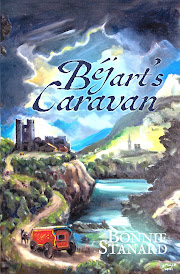
My book Dust on the Bible has been published by Belle Isle Books with a few changes to the original, which I self published several years ago. When Belle Isle expressed an interest in publishing another edition, I jumped at the offer. 


Dust on the Bible has appeal for readers of Young Adult, Literary, Historical Fiction, and Religion readers. Lily’s spiritual journey is combined with a mystery. When she tries to find out why her father is not living with the family, she discovers that her family is not as easily understood as she thought. 


The novel has received good reviews and I hope this edition will attract more traffic than the original. Chanticleer Reviews gave it five stars and a positive review with comments such as this:


"A poignant tale from start to finish, Dust on the Bible by Bonnie Stanard is a vivid and emotionally captivating story about the strife of a family living in rural South Carolina in 1944.

"Stanard creates a family with a non-nonsense way of life, but the family also carries a deep abiding love for each other; no matter what." 


Take a look, buy a book, and leave a comment!

THINKING QUOTE - "If you only read the books everyone else is reading, you can only think what everyone else is thinking." —Haruki Murakami

Dust on the Bible is available at Belle Isle Books:

https://www.belleislebooks.com/store/p258/Dust_on_the_Bible.html

amazon:

https://www.amazon.com/Dust-Bible-Bonnie-Stanard/dp/1962416739/ref=monarch_sidesheet_title

Barnes & Noble:

https://www.barnesandnoble.com/w/dust-on-the-bible-bonnie-stanard/1123171377?ean=9781962416733


Friday, January 10, 2025

How To Spell Cat


My cat Millie

What’s not to like about a cat?


They rid your house of mice. They rarely if ever talk out loud or start fights. They warm your easy chair; poop in their potty; and don’t need your attention, though they tolerate it unless they’re in a bad mood. A cat is a good companion just to prove to you that you need one.


I once had a cat named Millie (Ironically after Millie came a granddaughter named Milla, short for Camilla).


Millie was in the kennel so often she started to think of it as home. We came to realize our travel schedule wasn’t fair to her and gave her to an employee at the kennel.


Perhaps people who can’t love cats have trouble with mysteries. After all, you can’t understand everything, in particular a cat.


Why don’t cats come when called? Why won’t they go on walks with you? Why do they stare out the window and then refuse to go outside? Why? Why?


I wrote a poem titled “How To Spell Cat.” It’s being published in the next issue of Lost Pilots. But don’t expect any hints about understanding cat behavior.

Link to Lost Pilots: https://lostpilotslit.com/


Monday, July 15, 2024

Book Giveaway


 SIZZLING SUMMER DEAL


Ground is so hot in SC you can’t even go barefoot. Summer’s sizzling at a 100 degrees almost every day and I have a deal for you!


I’m working on a revised edition of Dust on the Bible, which should be released in a couple of months. In the meantime, I have five extra copies of the current edition. If you’re among the first five persons interested in a free copy (yes, FREE!) and fill in the “Contact Me” form on my website (link below), I’ll mail you a copy. Be sure to provide an address where you can receive the book.


(http://www.bonniestanard.com/contact.html)


ABOUT THE BOOK

Dust on the Bible begins in the fall of 1944 and comes to a close the following spring, as WWII is ending. Lily’s father is not a part of her extended family, and she makes little headway in finding out why. A tangled history unfolds as we learn the particulars of the marriage between Lily’s mother and father and the complex emotional tension that has persisted as a consequence. In the meantime her anxiety about death leads to a muddled belief in God which results in her joining and unjoining the church. Lily’s family have little education but they have wisdom that comes with experience.


UNDER THE BOARDWALK

Doug and I will get together with our family at Myrtle Beach, SC, at the end of July for a week’s vacation. As a comment on how families live any more, we’ll have relatives coming from London, England; Rome, GA; Augusta, GA; and Cincinnati. Given the new houses going up at the beach, you have little trouble finding one with six bedrooms. SO we’ll all be in one house. My favorite time/place is on the beach when the sun goes down.


Only God can make sunsets like this.


Wednesday, May 8, 2024

red-faced ranting


Me, this morning
RANT ON PUBLISHERS

Sometimes you just have to rant to keep your sanity. My sanity has been put to the test by my publisher's questionnaire regarding the upcoming release of a fiction book. In the list of questions:


1) List any potential reviewers, publications, and media outlets that you can contact who might be willing to publish a review, article, or announcement about your book.


2) List libraries, booksellers, and other venues who may host a book event for you.


3) you’ll need to talk about your book to groups and individuals, market your book on your website, social networks, and by other methods.


PROVIDE YOUR OWN MARKETING

Maybe I’m overreacting, but my impression is that the publisher isn’t just asking for assistance in marketing my book, it’s asking me to do all the marketing. From my previous experience, none of my publishers called me regarding a possible appearance or a possible interview or book signing. Not once.


INDEPENDENT PUBLISHER DILEMMA

The publisher here is a small independent publisher, which is where any unknown writer has an outside chance of getting their book published. Though independent publishers may be struggling to survive in a commercial environment that is toxic, to cut costs by cutting marketing is self-defeating, not just for their authors but for their own financial well being.


DO I HAVE FANS?

Do publishers realize that first time authors don’t have fans? We don’t belong to a hundred organizations. We don’t hobnob with literati. We don’t host socials. We have no clout.


CLOUT IS THE ISSUE

Publishers have clout, if they choose to use it. Who is more likely to get a book signing scheduled at Barnes & Noble—me (an unknown person) or a publisher (even an unknown one)? The mere fact that a publisher makes the call provides legitimacy, one that no beginning author can muster regardless of how wonderful the book.


LONG TERM EFFECT

When publishers cut the marketing department from the budget, their bottom line will look good in the short term, but the long term consequences are dismal. Publishers can only thrive if their authors thrive. And emerging authors can only thrive with marketing support from publishers.


An even more disappointing consequence is that some of the most creative and talented writers do not have a chance to reach an audience (despite enthusiastic promises from the self-publishing sector). We’ll blaze no new literary trails given the current environment.


Saturday, February 24, 2024

Short Story Accepted for Publication

  HOW FAR IS THE GAS STATION

From Encyclopedia Britannica

Close To the Bone has accepted my short story “How Far Is the Gas Station?” for publication. The estimated time of publication is this November. Close To the Bone is an online magazine that publishes edgy crime fiction, both short stories and novels


I wrote this story when I was invited to read at the Halloween “Noir at the Bar” event in Columbia last October. Like many noir stories, “How Far Is the Gas Station?” is marked by a dark theme with elements of violence and suggestions of sex. 


According to Close To the Bone’s website, their aim is “simply to bring you gritty and interesting short fiction across multiple genres.” Editor Craig Douglas was born in Ely, England. He joined the British Army when he got bored of life in a north eastern mining village and now lives in the UK. He spends time editing and publishes poetry and fiction.

Samples of novels published by Close To the Bone


Saturday, February 10, 2024

3 poems accepted for publication

PROTESTING

I have never liked the word protester. It’s a relative to the word victim. In the balance of power, protesters are losers. Their weakness makes them squeal rather than fight. I say this knowing full well that many protesters would fight, given the right circumstances. But circumstances have a lot to do with whether we are strong or weak. Over time and without the means to fight, a protester can become a whiner. Having said that, the word serves a useful if not necessary purpose and expands our language.


So why am I protesting the word protester? It’s my weakness. One of the poems to be published later this month in the ezine Bloom is a protest. How’s that for shooting myself in the foot?


“Period of Uncertainty” is about the predicament of women with respect to pregnancy and birth control. This protest embodies the ultimate power struggle, one in which a woman is pitted against religious belief as well as her own physiology. It ends with these lines:


Who will speak of these things
with a tongue untainted by inheritance?


Monday, November 6, 2023

appropriation

 Cultural appropriation is censorship by another name


One of the sessions at the SC Writers Association’s conference Saturday allowed writers to read aloud their query letter to a panel of three literary agents for critique. I made a mistake. Because I hadn’t read the directions carefully, I arrived with a pitch instead of a query letter, which I read anyway despite my embarrassment.


However, I couldn’t have been as disappointed with my critique as another writer who actually read a query letter. Her book, the subject of the letter, involved a story with a slave.


The subject of “appropriation” dominated the agents’ comments. Appropriation in writing is commonly understood to mean that a writer adopts customs, behavior, habits, etc., of a culture that’s not their own in producing a book. For example a white writer produces a story about a black, or a Latino writes about an Asian.


The writer at the conference who read her query letter before the panel was cautioned that we have to be careful in today’s environment. By the time the agents finished their cautionary statements, it was clear that the writer’s book had no chance of being published. The problem was her color. She was white and her story involved a black slave.


When it comes to cultural appropriation, a distinction should be made between historical fiction and contemporary fiction. It is easier to understand that ethnic groups have a right to claim their story as it exists today. Who better to understand the traditions, language, and ideas than one of their own members?


But historical fiction is another matter. The most contentious issue today is that blacks claim ownership of their history as slaves. The argument goes that they were the ones who suffered and no white (or yellow or red) person can understand this. But how can a black person living in the 21st Century understand what their ancestors underwent over a hundred years ago?


A white writer has as much access to the Slave Narratives and slave autobiographies as a black writer. When you come to think of it, one of the most powerful books written about slavery was written by a white woman. Historians credit Uncle Tom’s Cabin by Harriet Beecher Stowe with galvanizing the abolition movement. Are we to say she had no right to write this book?


Restricting historical fiction novels to certain authors based on ethnicity limits our perspective, imagination, concepts and understandings. The losers here are not just whites but black, reds, and yellows, the entire spectrum of literature.


"Query Letter" panel of literary agents